Yep, we may get a tiny thank-you (read: commission) when you buy through
links on Triptalkr — not enough for a yacht, but enough to keep the lights (and
servers) on.
Learn more
Ooops...!
You've got an alert.
8
Alternatives
0
Likes
The 8 Alternatives to T-Mobile
:
Budget-Friendly and Reliable Network Picks — 2026
Compare SIM Card carriers using coverage reliability, pricing models, and verified data thresholds like 25–50 GB priority limits.
Explore Your Options
Alternative products worth considering.
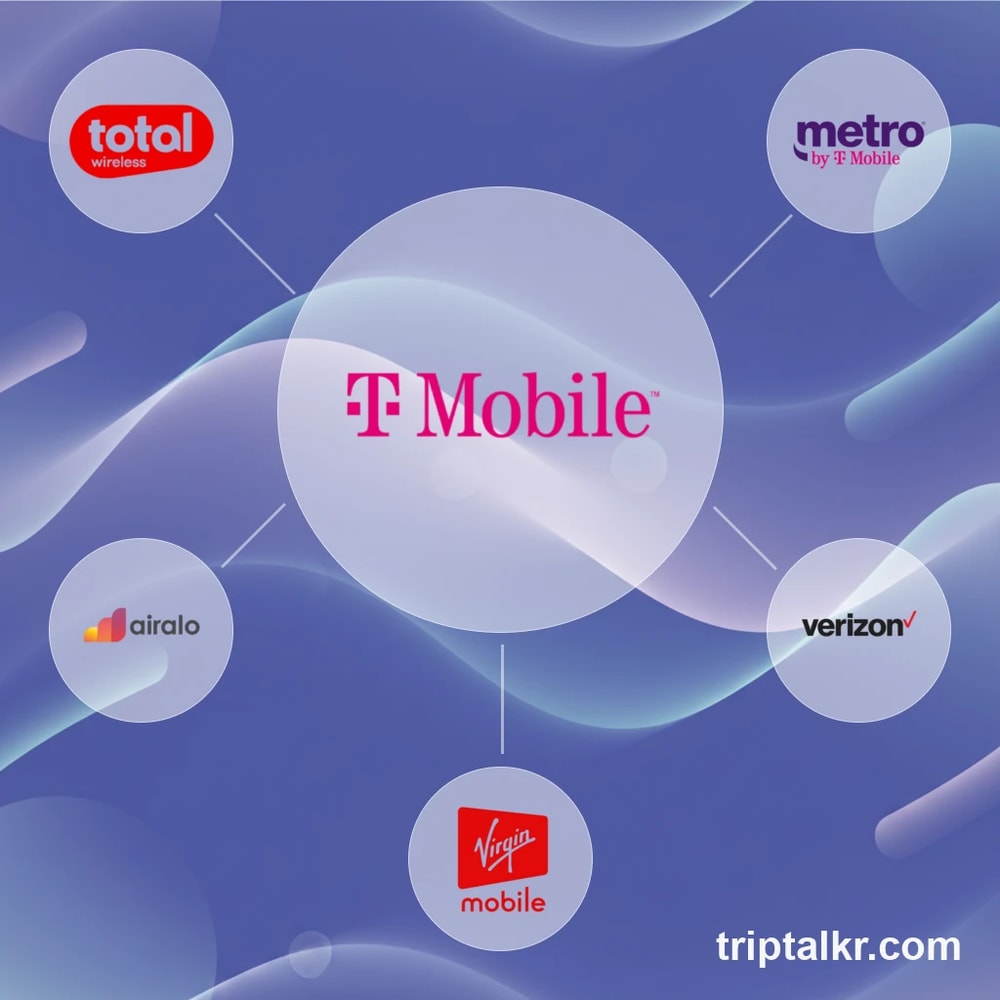
T-Mobile remains a familiar reference point in the SIM Card market because it offers broad 5G availability, premium-tier hotspot options, and international perks on higher-cost plans. But for many shoppers, the real question is not whether T-Mobile works; it is whether another carrier can deliver a better fit on the metrics that matter most, such as monthly cost, priority data limits, hotspot allowances, included taxes and fees, and how reliably service holds up when local towers are busy.
That is why people searching for an Alternative to T-Mobile: Budget-Friendly and Reliable Network Picks often start with practical trade-offs instead of brand loyalty. Some want to lower a single-line bill, with examples in the source set showing alternatives around $20 to $40 per month. In contrast, others care more about family pricing, where four-line plans can vary widely, from roughly $100 to $170, depending on the provider and included data. For heavier users, the gap gets even clearer when you compare measurable thresholds like 25 GB, 50 GB, or unlimited priority data, plus hotspot caps that range from 5 GB to 60 GB or more.
Coverage matters too, but not always in the way ads suggest. The staged sources repeatedly point to a more useful comparison standard: stable service where you actually live, work, and travel. Verizon-based options are often framed as stronger for broad suburban or rural consistency. At the same time, the T-Mobile-based alternatives can make more sense for shoppers who already like T-Mobile’s footprint but want lower prepaid pricing or simpler billing. Other services stand out because they include postpaid-level network priority, international roaming across more than 200 countries, or multi-network flexibility that can switch between carriers.
This guide approaches Alternative to T-Mobile: Budget-Friendly and Reliable Network Picks as a comparison exercise, not a takedown. The goal is to help readers evaluate which alternatives line up best with their own usage patterns, whether that means predictable prepaid costs, stronger family-plan economics, better travel support, or a more favorable balance between raw speed, congestion handling, and everyday reliability.
Alternative Options
Other products worth your attention.
Verizon serves as a relevant alternative to T-Mobile for most personal smartphone and tablet users, offering a comparable range of SIM types, device compatibility, and network technologies. However, there are some differences in regional coverage and network priority options.
Both offer Physical SIM and eSIM options with a Nano SIM form factor suitable for smartphones, tablets, and hotspot devices.
They support advanced network types, including 4G LTE and 5G, with extensive band support, such as Low Band, Mid Band, High Band, Sub-6 GHz, and mmWave, for high-speed connectivity.
Both carriers provide unlimited data plans with automatic network selection and SIM-based authentication, making activation and usage straightforward and flexible.
Each provides strong customer support options available 24/7 via multiple channels and maintains high standards in network reliability and connection stability.
While Verizon’s network region compatibility is local compared to T-Mobile’s global, and Verizon offers a broader range of billing types, including hybrid plans, it remains a practical and functional alternative for users prioritizing high network performance and device compatibility.
Nerdy Bits & Must-Knows
Specs worth knowing…
Verizon
SIM Card Type
What type of SIM card is this?
0
Verizon
0
Votes
Physical SIM, eSIM
SIM Card in this range
Who knows?
(Help us out by suggesting one!)
Defines whether the SIM is a physical card or embedded SIM.
Don’t keep it to yourself — be the first to react and review the
SIM Card Type on Verizon
◉ and help others decide!
Verizon
SIM Card Form Factor
What SIM form factor does it use?
0
Verizon
0
Votes
Nano SIM
SIM Card in this range
Who knows?
(Help us out by suggesting one!)
Indicates the physical size format of the SIM card.
Don’t keep it to yourself — be the first to react and review the
SIM Card Form Factor on Verizon
◉ and help others decide!
Verizon
Supported Network Type
Which network types are supported?
0
Verizon
0
Votes
2G, 3G, 4G LTE, 5G
SIM Card in this range
Who knows?
(Help us out by suggesting one!)
Indicates which cellular network types the SIM can connect to.
Don’t keep it to yourself — be the first to react and review the
Supported Network Type on Verizon
◉ and help others decide!
The Airalo Maneiro eSIM offers a viable alternative to the T-Mobile SIM service for users with compatible devices, especially for those prioritizing prepaid plans and travel. However, it differs in usage intent and network priority, which may affect performance and coverage.
Both support eSIM and Nano SIM formats and are compatible with smartphones, tablets, smartwatches, IoT devices, and hotspots.
The T-Mobile SIM provides global regional compatibility with a premium network priority and unlimited data plans. At the same time, Airalo Maneiro focuses on local region use with standard priority and limited data plans.
Both support 4G LTE and 5G networks and automatic network selection with SIM-based authentication for seamless connectivity.
Customer support is available 24/7 via multiple channels, and both offer flexible plan changes and automatic deactivation processes.
Overall, Airalo Maneiro can serve as a relevant alternative for travel or limited local use. Still, it may not fully replace T-Mobile’s service for users needing premium performance and unlimited data nationwide.
Nerdy Bits & Must-Knows
Specs worth knowing…
Airalo Maneiro
SIM Card Type
What type of SIM card is this?
0
Airalo Maneiro
0
Votes
eSIM
SIM Card in this range
Who knows?
(Help us out by suggesting one!)
Airalo Maneiro
The SIM card type is eSIM, which allows for digital SIM provisioning without the need for a physical card.
Defines whether the SIM is a physical card or embedded SIM.
Don’t keep it to yourself — be the first to react and review the
SIM Card Type on Airalo Maneiro
◉ and help others decide!
Virgin Mobile can serve as a relevant alternative to T-Mobile for many users, although there are some differences in network coverage and data plan options that may affect the overall experience.
Both use physical Nano SIM and eSIM formats compatible with a wide range of smartphones, tablets, and hotspot devices.
They support modern network technologies, including 4G LTE and 5G, enabling high-speed wireless connectivity.
Both carriers offer automatic network selection and SIM-based authentication for seamless connectivity.
Customer support availability is comparable with 24/7 access through phone, email, chat, and help center channels.
However, Virgin Mobile’s network region compatibility is regional rather than global, and it primarily offers prepaid billing with limited data plans, unlike T-Mobile’s unlimited and postpaid options. Additionally, Virgin Mobile’s network priority and speed class are slightly lower, which could impact service quality for premium users.
Nerdy Bits & Must-Knows
Specs worth knowing…
Virgin Mobile
SIM Card Type
What type of SIM card is this?
0
Virgin Mobile
0
Votes
Physical SIM, eSIM
SIM Card in this range
Who knows?
(Help us out by suggesting one!)
Defines whether the SIM is a physical card or embedded SIM.
Don’t keep it to yourself — be the first to react and review the
SIM Card Type on Virgin Mobile
◉ and help others decide!
Virgin Mobile
SIM Card Form Factor
What SIM form factor does it use?
0
Virgin Mobile
0
Votes
Nano SIM
SIM Card in this range
Who knows?
(Help us out by suggesting one!)
Indicates the physical size format of the SIM card.
Don’t keep it to yourself — be the first to react and review the
SIM Card Form Factor on Virgin Mobile
◉ and help others decide!
Virgin Mobile
Supported Network Type
Which network types are supported?
0
Virgin Mobile
0
Votes
3G, 4G LTE, 5G
SIM Card in this range
Who knows?
(Help us out by suggesting one!)
Indicates which cellular network types the SIM can connect to.
Don’t keep it to yourself — be the first to react and review the
Supported Network Type on Virgin Mobile
◉ and help others decide!
Boost Mobile can serve as a relevant alternative to T-Mobile for personal use on smartphones and similar devices, especially for users prioritizing prepaid plans and eSIM support. However, there are some differences in network performance and plan options to consider.
Both providers support Physical SIM and eSIM with Nano SIM form factor compatibility.
Intended device compatibility overlaps, including smartphones, tablets, and smartwatches.
Network types are comparable, with both supporting advanced 5G technology and similar network bands.
Boost Mobile offers primarily prepaid billing plans, whereas T-Mobile supports both prepaid and postpaid options.
T-Mobile delivers a premium network priority and ultra-high-speed performance, while Boost Mobile provides a standard priority with high-speed but less consistent peak speeds.
Data plan differences include T-Mobile's unlimited data focus versus Boost's limited data plans.
Both offer automatic network selection and SIM-based authentication, facilitating ease of use and device switching.
Overall, Boost Mobile provides a practical alternative for users with moderate network demands and a preference for prepaid plans. However, it may not fully match T-Mobile's premium network performance and unlimited data availability.
Nerdy Bits & Must-Knows
Specs worth knowing…
Boost Mobile
SIM Card Type
What type of SIM card is this?
0
Boost Mobile
0
Votes
Physical SIM, eSIM
SIM Card in this range
Who knows?
(Help us out by suggesting one!)
Defines whether the SIM is a physical card or embedded SIM.
Don’t keep it to yourself — be the first to react and review the
SIM Card Type on Boost Mobile
◉ and help others decide!
Boost Mobile
SIM Card Form Factor
What SIM form factor does it use?
0
Boost Mobile
0
Votes
Standard SIM,Micro SIM,Nano SIM
SIM Card in this range
Who knows?
(Help us out by suggesting one!)
Indicates the physical size format of the SIM card.
Don’t keep it to yourself — be the first to react and review the
SIM Card Form Factor on Boost Mobile
◉ and help others decide!
Boost Mobile
Intended Device Type
What devices is this SIM intended for?
0
Boost Mobile
0
Votes
Smartphone, Tablet, Smartwatch
SIM Card in this range
Who knows?
(Help us out by suggesting one!)
Identifies the types of devices the SIM is designed for.
Don’t keep it to yourself — be the first to react and review the
Intended Device Type on Boost Mobile
◉ and help others decide!
The Total Wireless eSIM serves as a relevant alternative to the T-Mobile SIM offering, particularly for users seeking eSIM capability and basic smartphone connectivity. While there are differences in network priority and coverage scope, the comparison product aligns well with fundamental usage needs.
Both offer compatibility with smartphone devices and support 4G LTE and 5G network types.
Both rely on SIM-based authentication and support automatic network selection.
Each supports personal use with prepaid billing options, and both provide plastic SIM cards (physical or eSIM form factors).
Network speed is high with both, though T-Mobile has a premium priority level compared to the standard level of Total Wireless.
Overall, Total Wireless eSIM is a viable option for users who prioritize eSIM technology and basic connectivity within more localized regions, but it may have limitations for those requiring global coverage and the highest network priority.
Nerdy Bits & Must-Knows
Specs worth knowing…
Total Wireless eSIM
SIM Card Type
What type of SIM card is this?
0
Total Wireless eSIM
0
Votes
eSIM
SIM Card in this range
Who knows?
(Help us out by suggesting one!)
Total Wireless eSIM
The SIM card type is eSIM, which is embedded directly into compatible devices, eliminating the need for a physical SIM card.
Defines whether the SIM is a physical card or embedded SIM.
Don’t keep it to yourself — be the first to react and review the
SIM Card Type on Total Wireless eSIM
◉ and help others decide!
Total Wireless eSIM
Intended Device Type
What devices is this SIM intended for?
0
Total Wireless eSIM
0
Votes
Smartphone
SIM Card in this range
Who knows?
(Help us out by suggesting one!)
Total Wireless eSIM
The intended device type for this SIM is Smartphone, making it optimized for typical mobile communication and data needs.
Identifies the types of devices the SIM is designed for.
Don’t keep it to yourself — be the first to react and review the
Intended Device Type on Total Wireless eSIM
◉ and help others decide!
Total Wireless eSIM
Supported Network Type
Which network types are supported?
0
Total Wireless eSIM
0
Votes
4G LTE, 5G
SIM Card in this range
Who knows?
(Help us out by suggesting one!)
Indicates which cellular network types the SIM can connect to.
Don’t keep it to yourself — be the first to react and review the
Supported Network Type on Total Wireless eSIM
◉ and help others decide!
Lyca Mobile SIM offers many similar features to T-Mobile's service. It could serve as a practical alternative for personal mobile connectivity, particularly for users needing broad device and regional support. However, there are some differences in network priority, data plan types, and device compatibility that may affect user experience.
Both provide global SIM card compatibility and support major device types, including smartphones, tablets, and hotspots.
Each supports 4G LTE and 5G network technologies, with automatic network selection and SIM-based authentication for seamless connectivity.
Both utilize plastic SIM cards in the nano form factor and support easy device switching with flexible plan change options.
Lyca Mobile operates primarily on prepaid plans with limited data allocation, whereas T-Mobile offers both prepaid and postpaid billing with unlimited data plans and premium network priority.
Overall, Lyca Mobile SIM can replace T-Mobile for typical personal usage, but may offer a different level of data service and network experience.
Nerdy Bits & Must-Knows
Specs worth knowing…
Lyca Mobile SIM
SIM Card Type
What type of SIM card is this?
0
Lyca Mobile SIM
0
Votes
Physical SIM
SIM Card in this range
Who knows?
(Help us out by suggesting one!)
Defines whether the SIM is a physical card or embedded SIM.
Don’t keep it to yourself — be the first to react and review the
SIM Card Type on Lyca Mobile SIM
◉ and help others decide!
Lyca Mobile SIM
Intended Device Type
What devices is this SIM intended for?
0
Lyca Mobile SIM
0
Votes
Smartphone, Tablet, Hotspot
SIM Card in this range
Who knows?
(Help us out by suggesting one!)
Identifies the types of devices the SIM is designed for.
Don’t keep it to yourself — be the first to react and review the
Intended Device Type on Lyca Mobile SIM
◉ and help others decide!
Lyca Mobile SIM
SIM Card Region Compatibility
Which regions does the SIM support?
0
Lyca Mobile SIM
0
Votes
Global
SIM Card in this range
Who knows?
(Help us out by suggesting one!)
Lyca Mobile SIM
The SIM has global region compatibility, allowing it to be used internationally without restrictions tied to a local or regional network.
Indicates geographic regions where the SIM can operate.
Don’t keep it to yourself — be the first to react and review the
SIM Card Region Compatibility on Lyca Mobile SIM
◉ and help others decide!
Metro by T-Mobile is a strong alternative to T-Mobile for personal mobile connectivity, offering similar device compatibility and essential network features. However, it is more regionally focused and has some differences in network priority and technology support that could affect advanced usage scenarios.
Both support eSIM and Nano SIM formats and are compatible with smartphones, tablets, smartwatches, IoT devices, and hotspots for personal use.
T-Mobile supports global SIM card region compatibility, while Metro by T-Mobile is regionally limited, which may affect international roaming.
T-Mobile offers both prepaid and postpaid billing options with premium network priority and ultra high-speed network class; Metro by T-Mobile is prepaid only with standard network priority and high-speed class.
Both carriers support 4G LTE and 5G technologies with similar network bands and automatic network selection, though Metro currently emphasizes 4G LTE more explicitly.
Overall, Metro by T-Mobile can practically replace T-Mobile for users primarily needing prepaid, regional service with solid 4G/5G connectivity, but may be less suitable for those requiring premium network priority and full global roaming capabilities.
Nerdy Bits & Must-Knows
Specs worth knowing…
Metro by T-Mobile
SIM Card Type
What type of SIM card is this?
0
Metro by T-Mobile
0
Votes
eSIM
SIM Card in this range
Who knows?
(Help us out by suggesting one!)
Defines whether the SIM is a physical card or embedded SIM.
Don’t keep it to yourself — be the first to react and review the
SIM Card Type on Metro by T-Mobile
◉ and help others decide!
Metro by T-Mobile
Intended Device Type
What devices is this SIM intended for?
0
Metro by T-Mobile
0
Votes
Smartphone, Tablet, Smartwatch, IoT Device, Hotspot
SIM Card in this range
Who knows?
(Help us out by suggesting one!)
Identifies the types of devices the SIM is designed for.
Don’t keep it to yourself — be the first to react and review the
Intended Device Type on Metro by T-Mobile
◉ and help others decide!
Metro by T-Mobile
SIM Card Region Compatibility
Which regions does the SIM support?
0
Metro by T-Mobile
0
Votes
Regional
SIM Card in this range
Who knows?
(Help us out by suggesting one!)
Indicates geographic regions where the SIM can operate.
Don’t keep it to yourself — be the first to react and review the
SIM Card Region Compatibility on Metro by T-Mobile
◉ and help others decide!
Tello Mobile offers a relevant alternative to T-Mobile for users seeking global SIM compatibility and modern cellular network support, although there are some differences in network priority and voice call technology that may affect user experience.
Both support eSIM and Nano SIM formats suitable for smartphones, tablets, and hotspot devices.
They operate on global networks supporting 4G LTE and 5G, including sub-6 GHz and mmWave bands.
Tello Mobile provides prepaid billing with flexible data plans, including both limited and unlimited options, similar to T-Mobile’s offerings.
Network selection is automatic on both, with low latency and SIM-based authentication ensuring stable connections.
While Tello Mobile has a standard network priority compared to T-Mobile’s premium level and uses VoIP-based voice calls versus T-Mobile’s circuit-switched calls, it remains a practical and functional substitute for general personal and business mobile connectivity needs.
Nerdy Bits & Must-Knows
Specs worth knowing…
Tello Mobile
SIM Card Type
What type of SIM card is this?
0
Tello Mobile
0
Votes
eSIM
SIM Card in this range
Who knows?
(Help us out by suggesting one!)
Defines whether the SIM is a physical card or embedded SIM.
Don’t keep it to yourself — be the first to react and review the
SIM Card Type on Tello Mobile
◉ and help others decide!
Tello Mobile
SIM Card Form Factor
What SIM form factor does it use?
0
Tello Mobile
0
Votes
Nano SIM
SIM Card in this range
Who knows?
(Help us out by suggesting one!)
Indicates the physical size format of the SIM card.
Don’t keep it to yourself — be the first to react and review the
SIM Card Form Factor on Tello Mobile
◉ and help others decide!
Tello Mobile
Supported Network Type
Which network types are supported?
0
Tello Mobile
0
Votes
4G LTE, 5G
SIM Card in this range
Who knows?
(Help us out by suggesting one!)
Indicates which cellular network types the SIM can connect to.
Don’t keep it to yourself — be the first to react and review the
Supported Network Type on Tello Mobile
◉ and help others decide!
Worth a Second Look
Didn't make the cut this time, but still solid options.
Stuff You Were Too Shy to Ask
But we answered it anyway.
What factors matter most when choosing a SIM card carrier alternative?
Choosing a carrier alternative usually starts with measurable indicators such as priority data limits, monthly pricing tiers, and network reliability. Many plans labeled unlimited still define thresholds, often around 25 GB to 50 GB of full-speed data before potential slowdowns. Coverage stability also matters more than peak speeds in many real-world situations. Independent testing groups such as RootMetrics and Opensignal regularly show that signal consistency and congestion handling can affect everyday tasks like navigation, video calls, or hotspot use more than advertised maximum download rates.
How does network congestion affect mobile data speeds on budget plans?
Budget and prepaid plans often operate with lower-priority data access during periods when many users share the same cell tower. This practice, sometimes described as data deprioritization, means speeds may temporarily decrease even if you have not used much data that month. Many plans publish a measurable threshold, commonly around 30 GB to 50 GB of high-speed usage, after which speeds may drop to slower levels, such as a few hundred kilobits per second. Understanding these limits helps users predict whether occasional slowdowns will affect daily activities like streaming, tethering, or file downloads.
Why do some plans require prepaid commitments or annual billing?
Prepaid billing structures help providers reduce administrative overhead and offer lower effective monthly prices. Instead of paying every month, users may purchase service in blocks of three, six, or twelve months. Longer commitments typically lower the average cost per month while maintaining the same network access. This model also removes credit checks and contracts, which some users prefer. However, the trade-off is paying more upfront and relying on digital account management rather than in-store service or device financing.
How much high speed data do typical unlimited plans really include?
Many plans marketed as unlimited include a measurable amount of priority high-speed data before network management policies apply. Industry comparisons often use benchmarks such as 25 GB per month for moderate users and about 50 GB for heavier use. After those thresholds, providers may reduce speeds to levels such as 128 Kbps or 512 Kbps, depending on the policy. These limits do not usually stop connectivity completely, but they can affect demanding activities like high-definition streaming or large downloads. Checking the provider’s network management policy clarifies how those limits work.
What role does hotspot data allowance play in plan comparisons?
Hotspot features let a phone share its connection with laptops or tablets, but plans vary widely in how they measure usage. Many alternatives include 3 GB to 10 GB of full-speed hotspot data, while premium tiers may offer 30 GB to 60 GB. Once that allowance is reached, speeds are often reduced to slower rates such as 600 Kbps. This difference matters for people who work remotely or travel frequently, since hotspot usage can quickly exceed small limits when running video meetings or uploading files.
Can international roaming features differ significantly between carriers?
International support can vary widely depending on the provider’s roaming agreements and plan tier. Some services include data access in more than 200 countries, while others charge additional roaming fees or limit speeds when traveling abroad. Certain plans provide a small monthly allowance of full-speed data overseas, followed by slower fallback speeds such as 128 Kbps. These technical details determine whether travelers can comfortably use navigation apps, messaging, or email without purchasing separate temporary SIM cards.
Which plan characteristics influence long term pricing stability?
Pricing stability often depends on the billing structure and how clearly a provider defines its rate guarantees. Some alternatives advertise fixed monthly pricing or “price lock” policies designed to prevent unexpected increases. Others rely on promotional pricing that may change after an introductory period. Comparing taxes-included pricing, autopay discounts, and multi-line bundles can reveal the real yearly cost. These details help consumers estimate long-term expenses more accurately than relying solely on advertised monthly prices.
Is coverage or peak speed more important for everyday mobile reliability?
Real-world testing suggests that consistent coverage and stable latency often matter more than peak download speeds. While modern networks advertise multi-hundred-megabit connections, everyday tasks such as messaging, navigation, or streaming require far less bandwidth. What typically affects user experience is whether the connection remains stable when moving between locations or during busy hours. This is why coverage comparisons frequently examine signal availability and congestion handling rather than relying solely on maximum speed benchmarks.
Big Brain Stuff, Summed Up
Because who reads everything, right?
Finding the right Alternative to T-Mobile: Budget-Friendly and Reliable Network Picks often comes down to comparing measurable factors rather than brand familiarity alone. Plan pricing, priority data thresholds, hotspot allowances, and real-world coverage stability can vary widely between providers using the same underlying infrastructure. Many alternatives offer competitive pricing models around prepaid billing or multi-line discounts, while others emphasize network flexibility or international connectivity. Evaluating limits such as 25 GB to 50 GB of high-speed data, hotspot allocations ranging from roughly 3 GB to 60 GB, and how a plan handles network congestion management helps clarify whether a service fits everyday usage patterns.
Coverage consistency and predictable costs can be just as important as peak download speeds when choosing a SIM Card provider. Independent benchmarks from sources such as Opensignal or RootMetrics indicate that signal reliability and congestion handling often shape the real experience more than headline speed figures. Some alternatives may offer stronger suburban coverage or simpler prepaid structures, while others focus on international access or network-switching capabilities. Comparing these verified metrics alongside billing transparency and long-term pricing stability helps readers determine which option aligns with their needs.
Ultimately, the most practical decision is the one supported by clear data and personal usage patterns. By reviewing measurable thresholds, coverage indicators, and plan structures side by side, readers can identify which alternative delivers the most balanced value relative to T-Mobile. Careful comparison remains the most reliable way to choose a network that performs consistently and fits long-term expectations.